
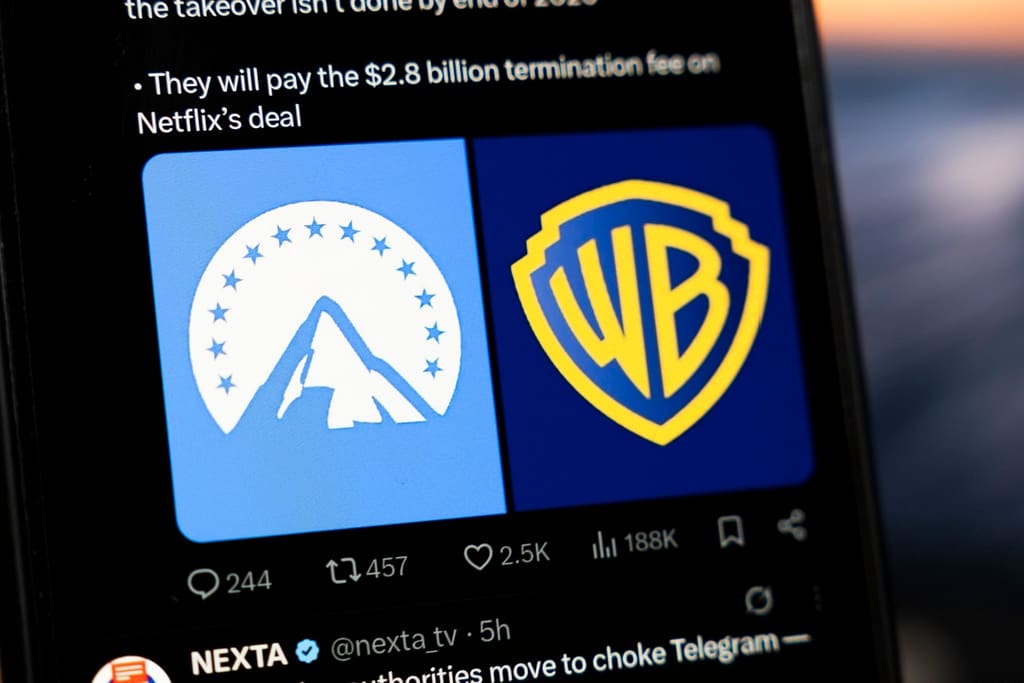
Some deals change a company. This one changes an industry.
On April 23, Warner Bros. Discovery shareholders voted to approve a $110 billion acquisition by Paramount Skydance — a transaction that would bring two of the most recognisable names in entertainment history under a single corporate roof. Warner Bros. The studio behind Casablanca, The Dark Knight, and Harry Potter. Paramount. The studio that gave us The Godfather, Top Gun, and a century of American cinema. Together.
This isn’t a routine merger. It’s a seismic shift — the kind that gets taught in media studies courses a decade from now — and the shareholder vote is only the beginning of the story.
What Exactly Is Being Acquired
The scope here is worth sitting with for a moment. Paramount’s $31-per-share offer acquires the entirety of WBD — cable networks CNN, TNT, and Discovery Channel, streaming service HBO Max, and the Warner Bros. film studio itself. CNBC
That $31-per-share price represents a 147% premium over WBD’s unaffected stock price — a number that tells you just how badly Paramount Skydance wanted this deal to happen, and how motivated WBD’s board was to get it across the line. The transaction is expected to close in Q3 2026, subject to regulatory approval in both the US and Europe. NBC NewsNBC News
Rick Lyman, TV and film industry consultant, points out that consolidation at this scale is genuinely rare. It happens once or twice in a generation — and when it does, the industry reorganises itself around the new power structure for years afterward. Every studio, streamer, network, and talent agency in Hollywood is currently recalculating.
What Ellison Is Promising
Paramount CEO David Ellison has moved quickly to manage the anxiety that deals of this size tend to generate among filmmakers and creative talent. He pledged to keep films in theaters for at least 45 days and committed to releasing 30 films a year across both studios. Warner Bros. Pictures, he confirmed, will remain a standalone operation. NBC News
That last point matters. Brand erasure is one of the genuine fears in any mega-merger — the quiet absorption of a beloved name into a faceless corporate entity. Keeping Warner Bros. Pictures intact is a direct signal to the creative community that Ellison understands what he’s buying isn’t just infrastructure. It’s legacy.
The 45-day theatrical window commitment is equally telling. It’s a deliberate pushback against the streaming-first mentality that reshaped distribution in the early 2020s, and theater chains will have noticed. Plans to merge CBS Sports and TNT Sports post-acquisition have also been confirmed — a consolidation that reshapes the sports broadcasting landscape almost as significantly as it reshapes film.
What Could Still Derail It
The shareholder vote was always going to pass. The tougher road runs through Washington and Brussels. Regulatory approval is still required in both the US and Europe before the deal can formally close. A consumer lawsuit has already been filed citing antitrust concerns and what the filing describes as “viewpoint diversity” issues. Canada’s Competition Bureau has separately announced its own review. NBC NewsDeadline
Hollywood labor groups are watching closely. So are theater chains, who broadly support the 45-day window pledge but remain wary of what happens to their negotiating leverage once a single entity controls this much content. Rick Lyman notes that the regulatory conversation is where the real uncertainty lives — not in whether the deal is good for shareholders, but whether it’s good for competition, for consumers, and for the long-term health of an industry already in the middle of a difficult structural transition.
Why This Matters Beyond the Boardroom
Strip away the financial language and this story comes down to something straightforward. Fewer independent major studios means fewer competing buyers for creative talent, fewer distinct voices greenlighting projects, and fewer bidding wars that drive up investment in original content.
For audiences, consolidation at this scale historically — not immediately, but eventually — tightens content diversity and puts upward pressure on subscription pricing. For writers, directors, and producers, it narrows the field of potential partners in ways that take years to fully feel.
The deal closing in Q3 2026 would put a significant punctuation mark on what has already been a turbulent year for legacy media. But the merger itself is really just the opening chapter. The real story is what comes next: which brands survive intact, which get quietly folded into something else, and who in Hollywood gains or loses leverage when David Ellison holds the keys to both Warner and Paramount at the same time.
That’s the question worth watching. And the answer won’t arrive all at once.
Leave a Reply